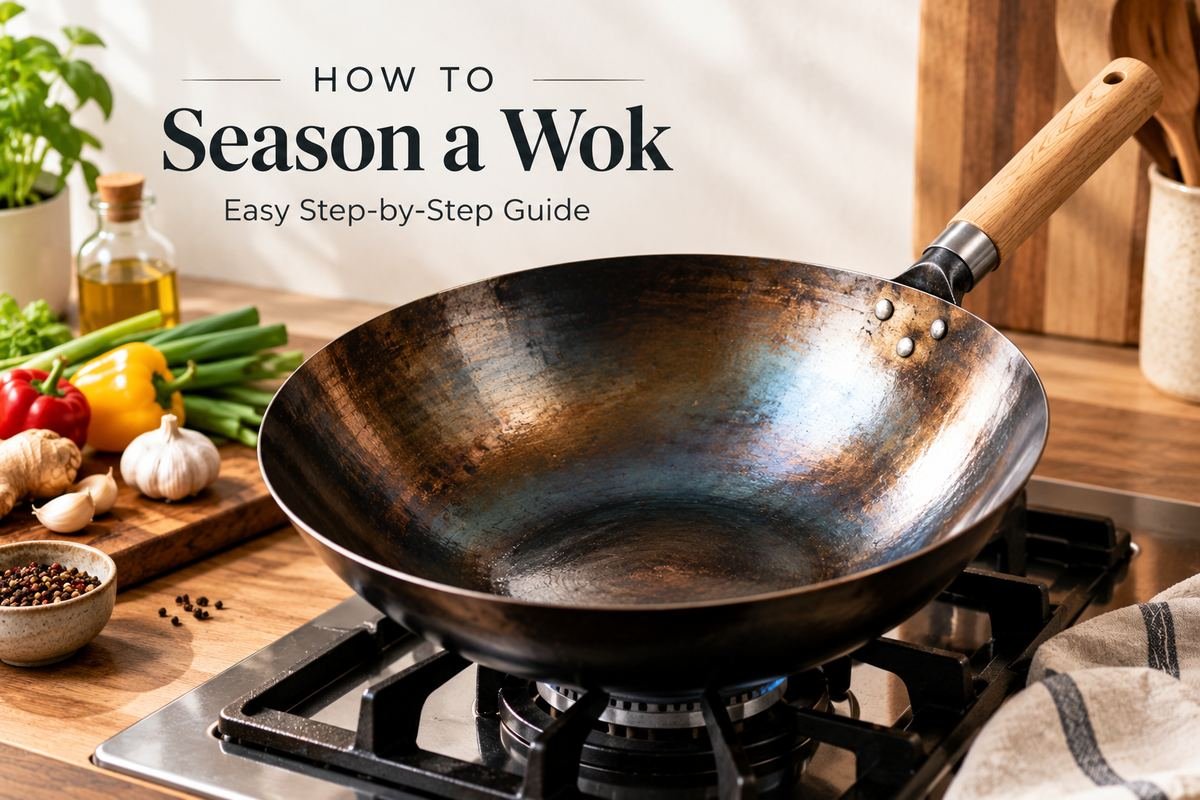
How to Season a Wok: Easy Step-by-Step Guide
If you have recently bought a carbon steel wok, you have probably heard that you need to season it before cooking. At first, the process can sound more complicated than it really is.
Learning how to season a wok is mostly about three things: cleaning the surface, heating it properly, and applying a very thin layer of oil. Once you get the basic process right, maintaining the wok becomes much easier.
Seasoning also isn’t something you do once and forget about. Every time you cook with oil, your wok can continue developing its patina. With proper care, the cooking surface can become smoother and easier to cook on over time.
In this guide, we’ll explain exactly how to season a wok, what oil to use, how to maintain the seasoning, and what to do if your wok starts sticking or develops rust.
What Does It Mean to Season a Wok?
Seasoning a wok means heating a thin layer of cooking oil on the steel until it bonds with the surface and forms a protective patina.
This is not the same as the synthetic coating found on many nonstick pans. A carbon steel wok develops its cooking surface gradually through heat, oil, and regular use.
You may notice the wok changing color as you season it. It can develop blue, brown, or darker areas, and the color may not look perfectly even. That’s normal for carbon steel.
The goal isn’t to make the wok look perfect after one session. The goal is to build a durable cooking surface that becomes better with regular use.
Why Does a Wok Need Seasoning?
Seasoning serves two important purposes.
First, the oil-based patina helps protect the steel from moisture and rust. Second, it can make the cooking surface easier for food to release from when the wok is heated and used correctly.
YOSUKATA explains that its oil seasoning creates a protective patina and that the seasoning continues developing through regular cooking.
This is one reason carbon steel cookware can last for years when it is properly maintained.
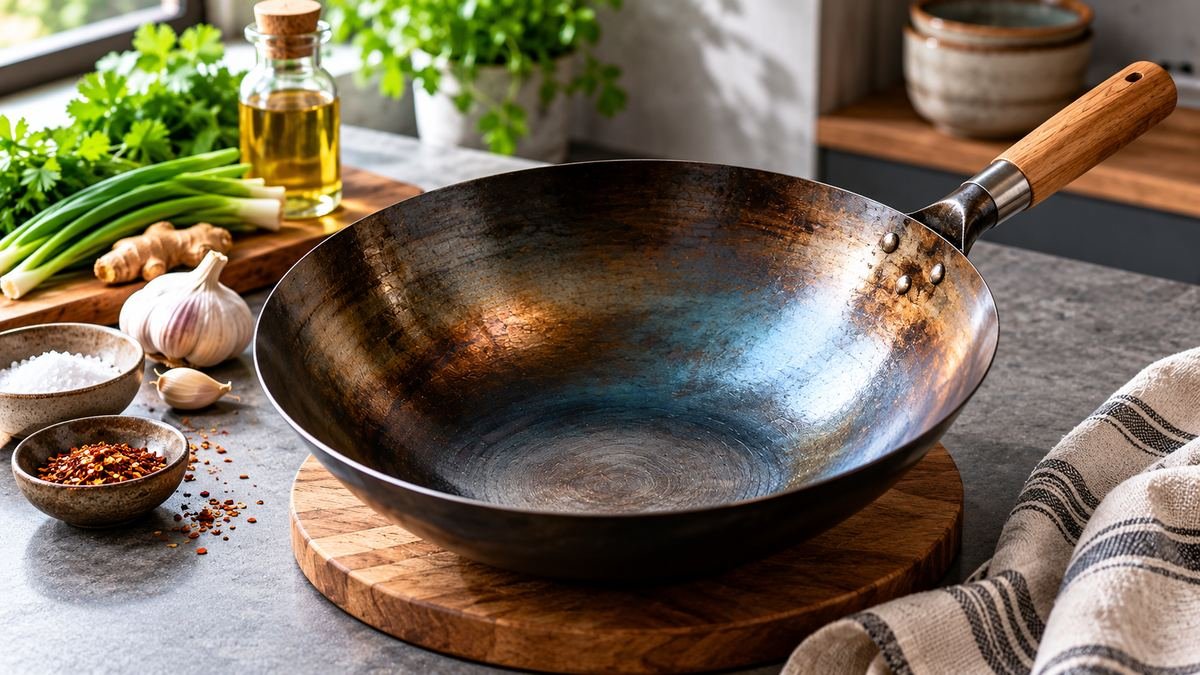
What You Need to Season a Wok
You don’t need expensive equipment for this process.
You’ll need:
- A clean carbon steel wok
- A cooking oil suitable for high heat
- Paper towels
- Tongs
- A stovetop
- Good kitchen ventilation
Keep a window open or turn on your range hood because the oil will smoke during seasoning. YOSUKATA also recommends good ventilation while seasoning a wok.
What Oil Is Best for Seasoning a Wok?
There isn’t one single oil that every home cook has to use.
Common options include:
- Vegetable oil
- Canola oil
- Peanut oil
- Grapeseed oil
- Sunflower oil
The important thing is to use an oil that works well at high temperatures and, more importantly, to apply it in a very thin layer.
Using a lot of oil won’t make the seasoning better. In fact, too much oil can leave the wok sticky and uneven.
How to Season a Wok Step by Step
Now let’s get into the actual process.
Step 1: Wash the Wok
Before you start seasoning, wash the wok according to the manufacturer’s instructions.
A new wok may have residue from manufacturing, packaging, or transportation. The surface should be clean before you begin.
For YOSUKATA woks, the company recommends washing the wok before completing the oil-seasoning process.
Step 2: Dry the Wok Completely
Place the clean wok over low or medium heat for a short time to remove any remaining moisture.
This step is important because carbon steel can rust when moisture is left on the surface.
Once the wok is completely dry, you’re ready to start heating it.
Step 3: Heat the Wok
Turn the heat up and allow the wok to become very hot.
You may notice the steel changing color as different areas heat up. Don’t worry if the color isn’t even.
If you’re using a wok with a wooden handle, be mindful of how close the handle is to the burner.
Step 4: Add a Small Amount of Oil
Once the wok is hot, add a small amount of cooking oil.
You don’t need to fill the bottom of the wok. You only need enough oil to create a very thin coating.
YOSUKATA’s basic method uses a small amount of oil and recommends reducing the heat once the oil begins to smoke.
Step 5: Spread the Oil Around the Wok
Once the oil starts smoking, reduce the heat.
Using paper towels held securely with tongs, carefully spread the oil around the inside of the wok.
Make sure you cover the bottom and sides rather than leaving oil sitting in one place.
YOSUKATA recommends spreading the oil around the wok for roughly 5–10 minutes in its basic seasoning method.
Be careful: the wok, oil, and paper towel can become extremely hot. Keep your hands away from the heated surface.
Step 6: Let the Wok Cool
Turn off the heat and allow the wok to cool.
Once it is safe to handle, wipe away any excess oil.
The surface should have a very thin coating rather than looking wet or greasy.
Step 7: Repeat the Process
If you want to build a stronger initial patina, repeat the oiling and heating process a few more times.
You don’t need to keep going until the entire wok becomes completely black.
YOSUKATA specifically notes that repeating the basic process can help build a thicker patina.
How Do You Know When a Wok Is Properly Seasoned?
Don’t judge your wok only by its color.
A newly seasoned carbon steel wok may have areas that are darker than others. You may also notice blue, brown, gray, or black patches as the surface changes.
That’s normal.
A better indication is how the wok behaves during cooking. As the patina develops, food should generally release more easily when you use the right heat and enough cooking oil.
Remember that seasoning continues to develop naturally as you cook.
How to Maintain Your Wok After Seasoning
Knowing how to season a wok is only half the job. Daily care is what keeps the surface in good condition.
Clean It After Cooking
Remove leftover food once the wok has cooled enough to handle safely.
For normal YOSUKATA care, the company recommends warm water and a soft sponge without detergent.
If food is stuck, don’t immediately attack the surface with aggressive scrubbing. Give the residue some time to loosen and use a suitable scraper or sponge when necessary.
Dry It Immediately
This is one of the most important habits.
After washing, dry the wok thoroughly with a towel. You can also place it over low heat briefly to evaporate any remaining moisture.
Never put a wet carbon steel wok away in a cabinet.
Apply a Thin Layer of Oil
Once the wok is dry, wipe a very small amount of oil over the cooking surface.
You don’t want a thick, greasy coating. A light layer is enough to help protect the steel between uses.
What If Food Starts Sticking?
Don’t assume your wok is ruined just because food sticks.
Sticking can happen when the wok hasn’t developed enough seasoning, isn’t hot enough before food is added, or doesn’t have enough cooking oil.
Try preheating the wok properly and using an appropriate amount of oil.
If sticking continues after regular use, you may need to build the seasoning again. YOSUKATA also notes that a wok can continue becoming more nonstick as its surface develops through cooking.
Internal link #2: This is another natural place to link “YOSUKATA Carbon Steel Wok Review” to your product review.
What If Your Wok Gets Rust?
Rust usually means the steel has been exposed to moisture for too long.
A small rusty spot doesn’t necessarily mean the wok needs to be replaced. Clean the affected area, dry the wok thoroughly, and reseason it.
YOSUKATA also advises removing rust and reseasoning the wok rather than treating minor rust as a reason to throw the cookware away.
The best way to prevent the problem is simple: keep the wok clean, dry, and lightly protected with oil.
Common Wok Seasoning Mistakes
Using Too Much Oil
This is one of the easiest mistakes to make.
A thick layer of oil can leave the wok sticky instead of creating the smooth patina you’re looking for.
Not Heating the Wok Properly
Seasoning depends on heat. If the wok isn’t heated enough, the oil may sit on the surface instead of forming the desired coating.
Leaving Water on the Surface
Even a properly seasoned wok can rust if it is repeatedly left wet.
Always dry it after washing.
Expecting a Perfect Black Wok
Your wok doesn’t have to become completely black after one seasoning session.
Uneven coloring is normal, especially when you’re starting.
Overcleaning the Surface
Aggressive cleaning can remove some of the seasoning you’ve worked to build.
For normal cleaning, follow the manufacturer’s care instructions and avoid unnecessary harsh scrubbing.
How Often Should You Season a Wok?
There isn’t a fixed schedule.
You don’t need to reseason your wok every week or every month completely. Regular cooking with oil can continue building the patina naturally.
You may want to reseason when:
- Food starts sticking more than usual
- Large areas of seasoning have worn away
- You notice bare patches
- The wok has developed rust
- You’ve used a cleaning method that removed much of the patina
Think of seasoning as an ongoing part of carbon steel wok care rather than a one-time task.
Can You Use Soap on a Seasoned Wok?
This is one area where care instructions can vary between manufacturers.
For YOSUKATA’s normal care instructions, the company recommends warm water and a soft sponge without detergent after cooking.
If you need to remove heavy buildup, rust, or damaged seasoning, a deeper cleaning process may be necessary before reseasoning.
The best way to ensure safety is to adhere to the provided instructions. supplied with your particular wok.
How to Build Better Seasoning Through Cooking
One of the easiest ways to improve your wok is to use it.
Cooking foods with some oil helps the patina develop naturally. Stir-fries, fried rice, vegetables, meats, and other suitable dishes can all become part of your regular seasoning routine.
You don’t need to stop cooking to check whether the surface is perfect constantly.
Use the wok, clean it properly, dry it, and lightly oil it when needed.
Over time, you’ll notice the surface changing.
Frequently Asked Questions
How long does it take to season a wok?
The initial process can be completed in one session, but developing a strong patina takes longer. Regular cooking with oil continues building the seasoning over time.
Can I use vegetable oil to season a wok?
Yes. Vegetable oil is commonly used for seasoning carbon steel cookware. For optimal results, apply a thin layer. And an even layer; heat it properly.
Why is my wok sticky after seasoning?
A sticky wok usually means there is too much oil sitting on the surface. Give it a good wipe to remove the extra oil, and next time, use a much thinner coating when seasoning.
How Do I Clean a Seasoned Wok?
Once you finish cooking, allow the wok to cool down until it is safe to handle. Then, remove any leftover food. Gently wash it with warm water and a soft sponge. Dry it thoroughly and follow the care instructions provided with your wok.
Can a Carbon Steel Wok Become Nonstick?
It can become much easier to cook with as the seasoning builds up. Food may release more easily from a well-seasoned wok, but it won’t feel exactly like a brand-new nonstick pan. Good heat control, a little cooking oil, and regular care still make a big difference.
Final Thoughts
Learning how to season a wok doesn’t have to be complicated.
Start with a clean and completely dry wok, heat it properly, apply a very thin layer of oil, and repeat the process if needed. After that, the most important thing is to use the wok and take care of it after each meal.
Don’t worry if the color looks uneven or the surface isn’t perfect immediately. Carbon steel changes with use, and the patina develops gradually.
With a little regular care, your wok can become one of those pieces of cookware that gets better and more familiar every time you use it.
If you’re still deciding which carbon steel wok to buy, you can also read our YOSUKATA Carbon Steel Wok Review to see its size, construction, cooking performance, pros, and cons.
“YOSUKATA Carbon Steel Wok Review” in this final paragraph to your review article.