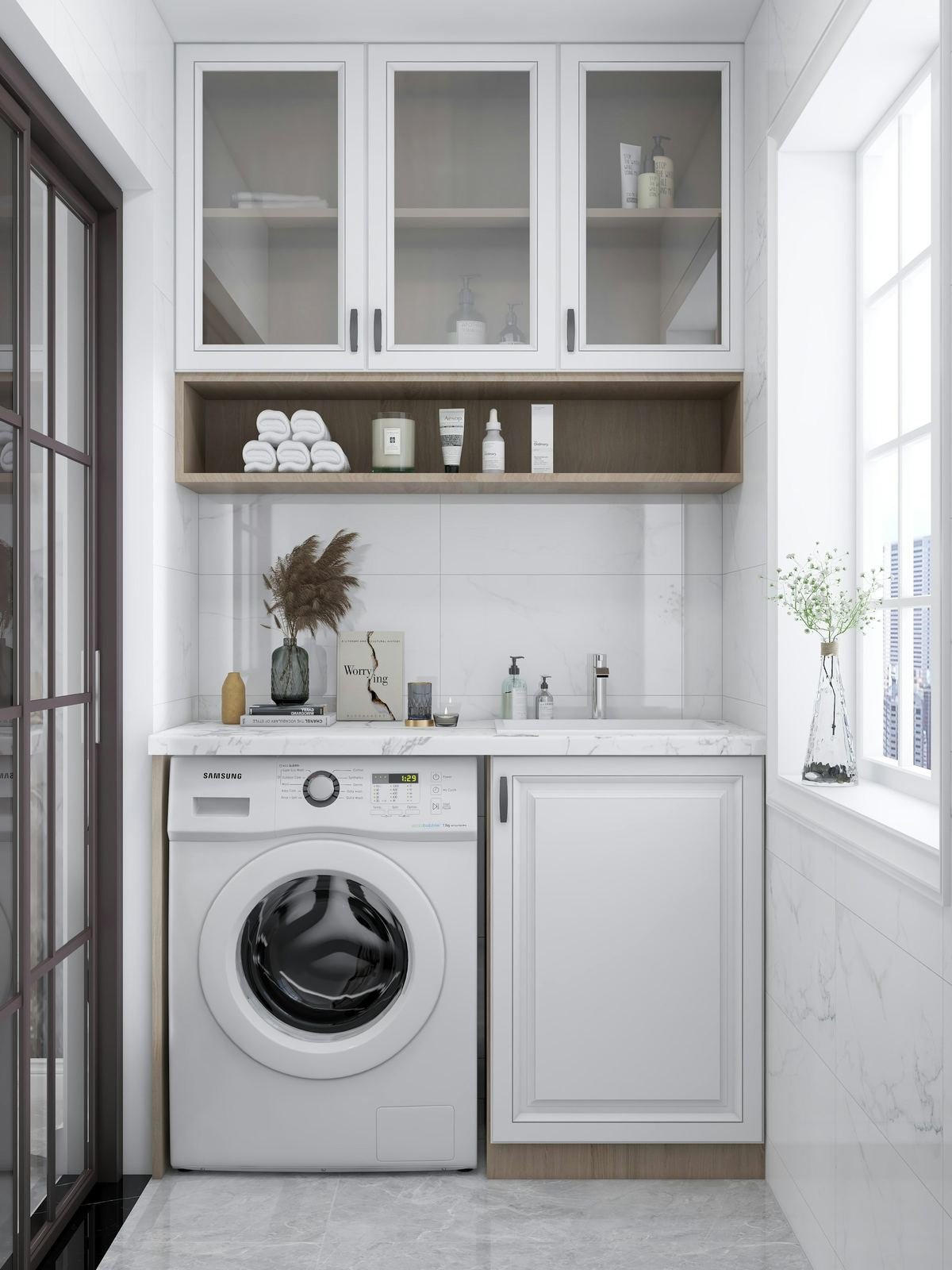
Laundry Room Shelving Ideas: 15 Ways to Maximize Vertical Space
Laundry rooms often have one valuable resource that gets overlooked: wall space.
When the floor is already occupied by a washer, dryer, baskets, and other essentials, adding more floor furniture can make the room feel cramped. Laundry room shelving ideas can provide extra storage while keeping the floor open.
From simple floating shelves to shelves above the washer and dryer, there are several ways to make vertical space more useful.
Here are 15 practical ideas to consider.
If you want a complete guide to organizing your laundry room, see our How to Organize a Laundry Room guide.
1. Install Floating Laundry Room Shelves
Floating shelves provide open storage without the visual bulk of a large cabinet.
They work well above a countertop, beside appliances, or on an otherwise unused wall.
Use them for everyday laundry products, baskets, folded towels, or decorative touches.

2. Add Shelves Above the Washer and Dryer
The wall above the appliances is often an obvious place for additional storage.
Depending on your layout, one or more shelves can provide space for detergent, baskets, cleaning supplies, and other laundry essentials.
Before installing the shelves, measure the available space properly and leave enough room to easily open, use, and maintain nearby appliances.
3. Use Deep Shelves for Baskets
If your laundry room has enough wall depth, wider shelves can hold baskets and larger containers.
Measure your baskets before installing the shelves.
There is little benefit in installing a shelf that is too shallow to hold the things you actually want to store.
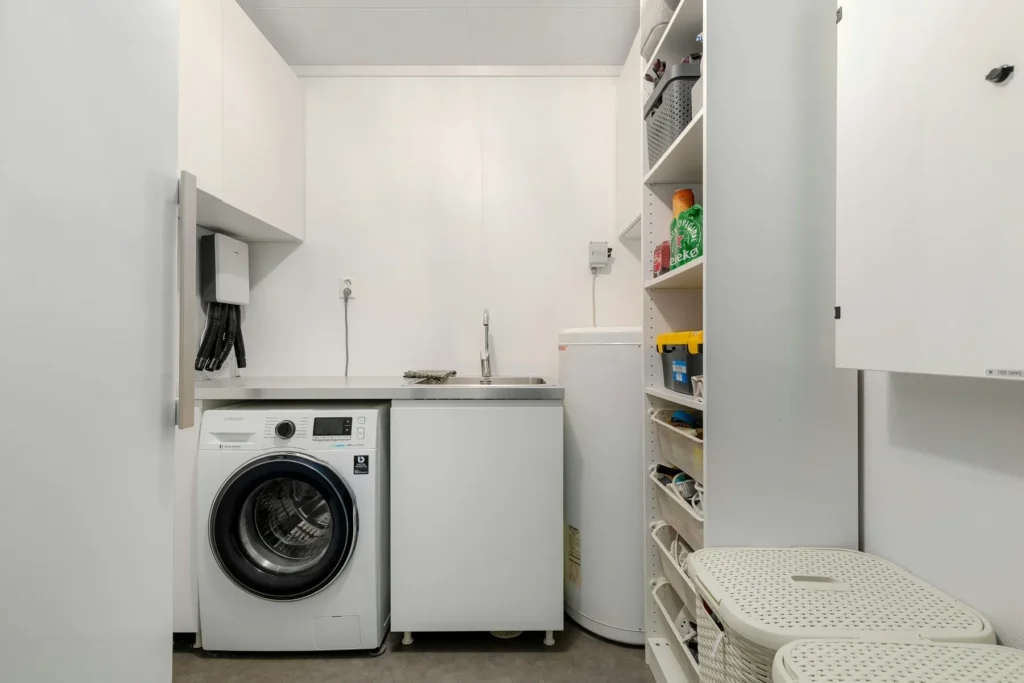
If you need more ideas for storing baskets, laundry supplies, and other essentials, explore our Laundry Room Storage Ideas.
4. Choose Narrow Shelves for Tight Spaces
Not every laundry room needs wide shelving.
If the room is narrow, a shallow shelf may be more practical.
Use narrow shelves for smaller items such as detergent bottles, brushes, laundry bags, and containers.
This can provide storage without making the walkway feel crowded.
5. Install Adjustable Shelving
Adjustable shelving can be useful if your storage needs change regularly.
You might need more vertical space for tall detergent bottles but shorter sections for small baskets.
Adjustable shelves let you change the spacing instead of replacing the entire storage system.
6. Combine Shelves With Cabinets
Open shelving is convenient because you can see everything quickly.
Cabinets, however, are better for items you would rather keep hidden.
Combining both can give you the best of both options.
For example, everyday detergent can stay on an open shelf while extra supplies are stored inside a cabinet above it.
7. Add a Hanging Rod Under a Shelf
A shelf does not have to provide storage only on its upper surface.
You can sometimes add a hanging rod underneath it for clothes that need to be air-dried or hung immediately after coming out of the dryer.
This makes one section of wall perform two functions.
8. Use Corner Shelves
Corners are easy to ignore because standard shelves may not fit comfortably.
Corner shelves can turn an unused area into useful storage.
They are particularly suitable for smaller items and supplies that do not need a large shelf.
9. Add a Shelf Above a Folding Surface
If your laundry room has a countertop or folding area, consider installing a shelf above it.
Keep items used during folding or laundry care nearby.
Just avoid placing too many objects directly above the work surface, or the folding area may become cluttered.
10. Use Shelves for Organized Baskets
Instead of placing small laundry items directly on open shelves, use baskets to group similar products together. This keeps the shelves looking tidy and makes smaller items easier to find.
For example, you could use one basket for laundry bags, another for cleaning cloths, and another for extra laundry accessories.
11. Create a Shelf for Everyday Products
Not every item needs to be stored high up.
Create one easily accessible shelf for the products you use during most laundry sessions.
This could include detergent, stain remover, dryer accessories, or laundry bags.
Less frequently used supplies can be moved to higher shelves or closed storage.
12. Add Shelving Beside the Appliances
If there is a narrow section of wall beside the washer or dryer, consider using it for vertical shelving.
A slim unit can hold smaller laundry products without taking up much floor space.
Just make sure there is enough clearance for appliance doors and comfortable movement around the room.
For more ways to make the most of limited space, check out our Small Laundry Room Organization Ideas.
13. Use Wooden Shelves for a Warmer Look
Functional storage does not have to look purely utilitarian.
Wooden shelves can bring warmth and character to a space—an otherwise practical laundry room.
Pair them with simple baskets or containers for a cleaner appearance.
Choose materials and finishes that are suitable for the conditions in your laundry room.

14. Keep the Highest Shelf for Infrequently Used Items
The highest shelf should not necessarily hold your everyday detergent.
Instead, use it for things you only need occasionally, such as seasonal supplies or extra storage containers.
Keep frequently used products at an easy-to-reach height.
This simple arrangement can make the entire room more convenient.
15. Don’t Overload Your Shelves
One of the most important laundry room shelving ideas is knowing when to stop adding things.
A shelf packed from one end to the other may technically provide storage, but it can be difficult to use.
Leave some breathing room between containers and avoid storing more weight than the shelf and mounting system are designed to support.
Always follow the manufacturer’s installation and weight guidelines.
How to Choose the Right Laundry Room Shelving
Before choosing shelves, measure the wall and think about what you actually want to store.
Consider:
- Shelf width
- Shelf depth
- Available height
- Weight of stored items
- Appliance clearance
- Door and cabinet access
- Ease of cleaning
For example, detergent bottles may require more depth than small laundry accessories.
Baskets may need wider shelves.
If you want to hang clothes underneath a shelf, leave enough vertical clearance for garments.
Planning these details first can prevent an expensive or inconvenient installation.
Laundry Room Shelves vs. Cabinets
Both have advantages.
Open laundry room shelves make everyday items easy to see and reach. They are also useful when you want quick access to detergent, baskets, and laundry accessories.
Cabinets keep supplies hidden and can make the room look less cluttered.
If you have enough wall space, combining shelves and cabinets can provide both accessibility and concealed storage.
Where Should Laundry Room Shelves Go?
The best location depends on the layout of your room.
Popular locations include:
- Above the washer and dryer
- Above a folding counter
- Beside the appliances
- On an empty wall
- Inside a laundry closet
- In unused corners
The important thing is to avoid blocking appliance doors, walking paths, vents, or access points that need to remain clear.
Final Thoughts
Good shelving can make a small laundry room feel much more functional without taking up valuable floor space.
Start by identifying what you need to store, then choose shelf depth, height, and placement around those needs.
Whether you choose floating shelves, corner shelves, adjustable shelving, or shelves above the washer and dryer, the goal is the same: make useful storage available while keeping your laundry routine simple.
For more ideas on organizing the entire room—not just the shelving—see our guide on How to Organize a Laundry Room.